

English
- English
- Español
- عربي
- français
- Deutsch
Choosing the Right Film Faced Plywood
Time: 2026-03-13 09:34:12
Author: Linyi Camel Plywood Co., Ltd
Click:
Choosing the Right Film Faced PlywoodYou’ve likely seen those slick, dark-coated
Choosing the Right Film Faced Plywood
You’ve likely seen those slick, dark-coated plywood sheets at the supply store and assumed the glossy finish guarantees durability. Yet, professional builders warn that choosing exterior plywood based on looks alone often leads to 'The Delamination Disaster,' where moisture causes layers to peel apart like wet cardboard. That smooth surface can easily hide a weak, recycled core destined to fail after just one pour.
Learning how to choose high-quality film faced plywood requires looking past the surface to the glue, core, and film density. By shifting your focus from the initial price tag to 'cost-per-use,' you protect both your project and your wallet. In practice, a slightly more expensive board that withstands twenty uses offers significantly better value than cheap plywood sheets that warp immediately.
More Than a Pretty Face: Why Phenolic Resin Film is Your Project's Waterproof Shield
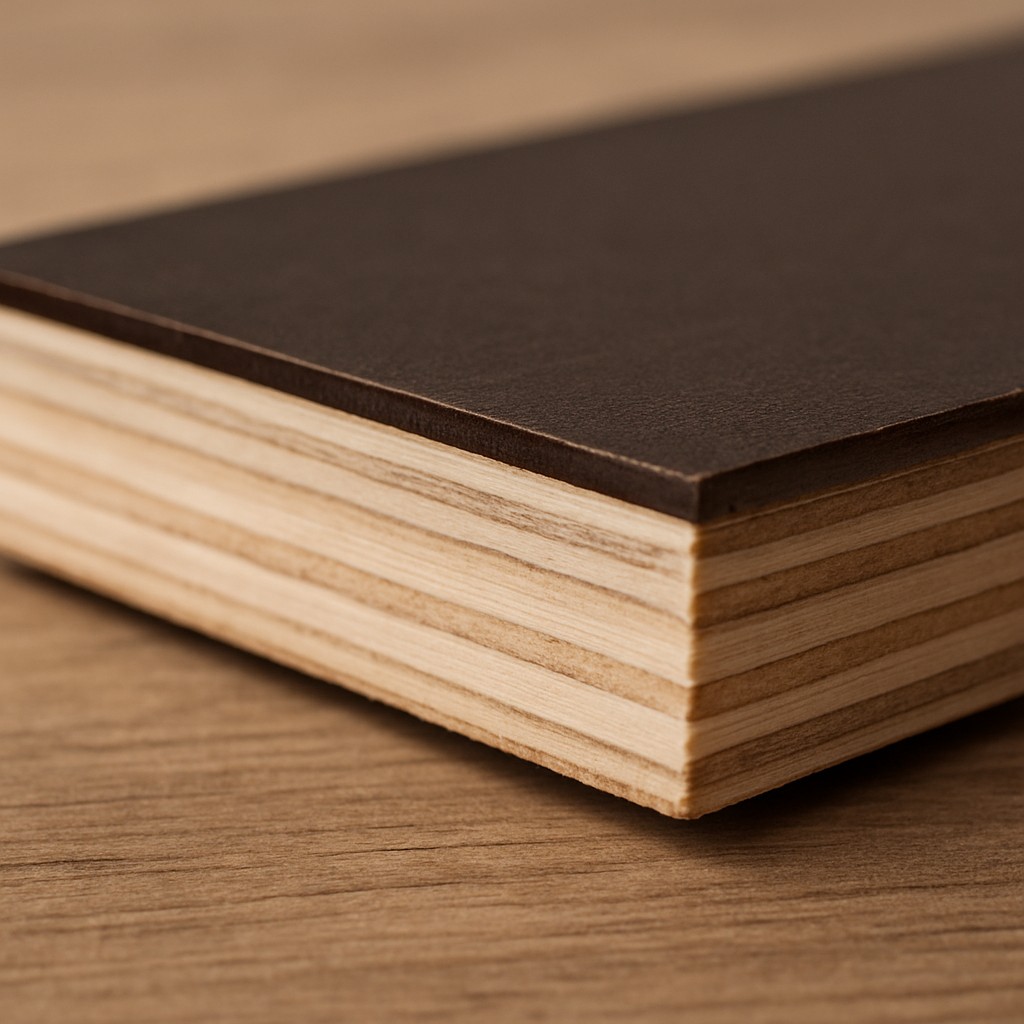
That smooth, shiny coating isn't just a layer of paint; it is phenolic resin film, a specialized paper saturated in synthetic resin and pressed onto the wood under high heat. Think of this coating as a permanent, industrial-grade raincoat fused to the board. This barrier provides the crucial waterproofing needed for concrete formwork and outdoor projects, ensuring the wood doesn't swell like a sponge the moment it touches wet cement or rain.
Durability depends heavily on the 'grammage,' or weight, of that paper. Standard boards often use lighter films, which look fine initially but can scratch or wear through quickly. If you plan to reuse the boards multiple times, checking the phenolic paper grammage impact on durability is essential:
- 120g/m²: Ideal for 4–8 uses; sufficient for most one-off DIY concrete pours.
- 220g/m²: Heavy-duty shielding; withstands 15+ uses and offers superior resistance to scratches.
Color often hints at quality, though it’s not a guarantee. Generally, differences between brown and black film face options are significant; brown films typically use pure phenolic resin for better bonding, while black films sometimes incorporate recycled additives that lower moisture resistance. However, even with excellent anti-abrasive phenolic film properties, the coating is only as strong as the wood beneath it.
Birch vs. Poplar: How Your Plywood's 'Bones' Determine If It Warps After One Use
Even the best waterproof raincoat won't help you if your bones are broken, and the same logic applies to plywood. While the film protects the surface, the core determines the strength. When comparing Birch vs poplar core shuttering boards, the difference lies in density. Poplar is a softer, lighter wood suitable for walls or light loads, while Birch is a high-density hardwood designed to handle the immense pressure of wet concrete without bowing.
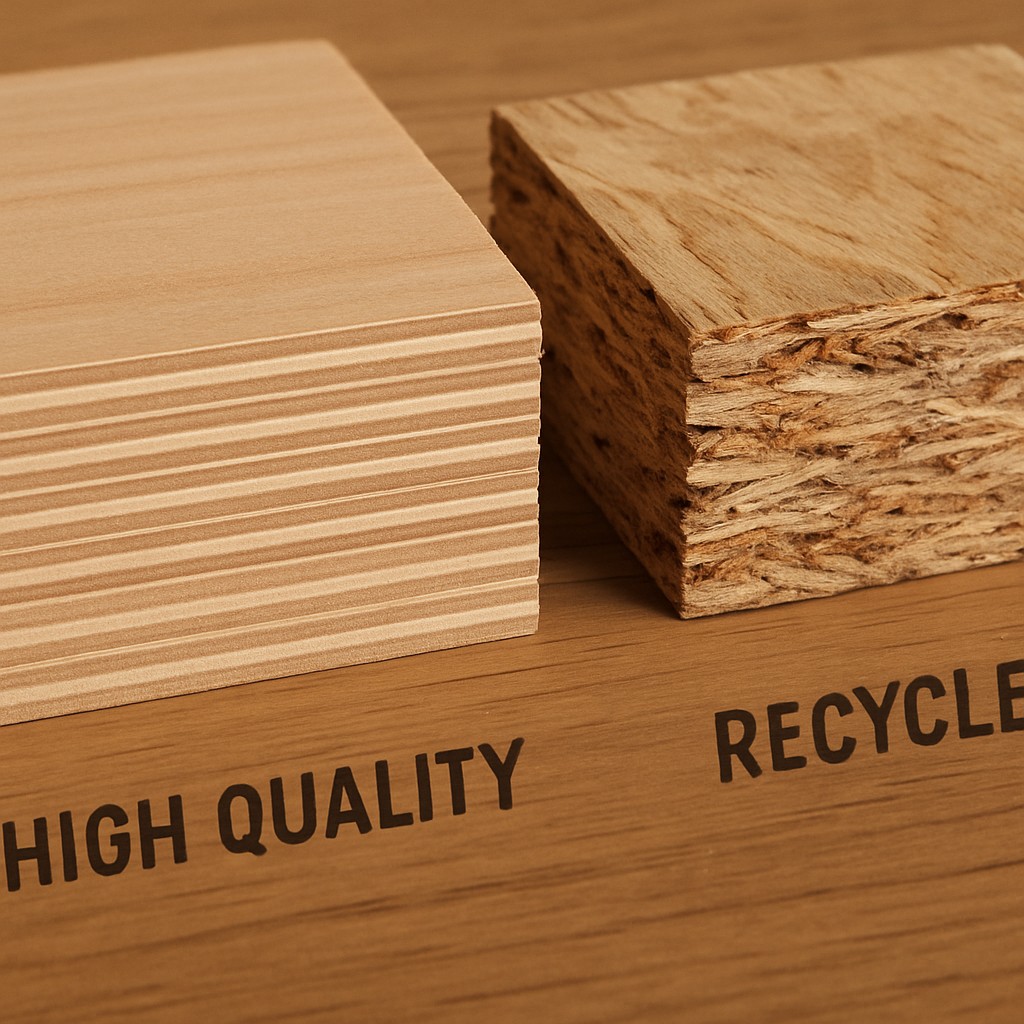
Danger lurks in the cheapest options, often disguised as high-quality boards. 'Recycled' or 'finger-joint' cores are made from scrap wood glued together, creating a core that lacks structural integrity. Identifying core gaps in shuttering panels is vital because these voids become weak points that snap under pressure. To detect high-density plywood cores versus scrap, look at the edge: fresh wood has continuous lines, while recycled cores look like a jagged, blocky puzzle.
Your choice should depend on your project's lifespan. Maximizing plywood reuse cycles in formwork starts with picking the right material:
- Recycled Core: 1–2 uses (High risk of breakage; avoid for load-bearing).
- Poplar Core: 5–10 uses (Standard DIY choice; cost-effective).
- Birch Core: 15–30+ uses (Professional durability; lowest cost per use over time).
Selecting the right wood is step one, but keeping those layers stuck together in the rain requires a specific chemical bond.
The WBP Glue Secret: Why 'Weather-Proof' Bonding is Non-Negotiable for Outdoor Success
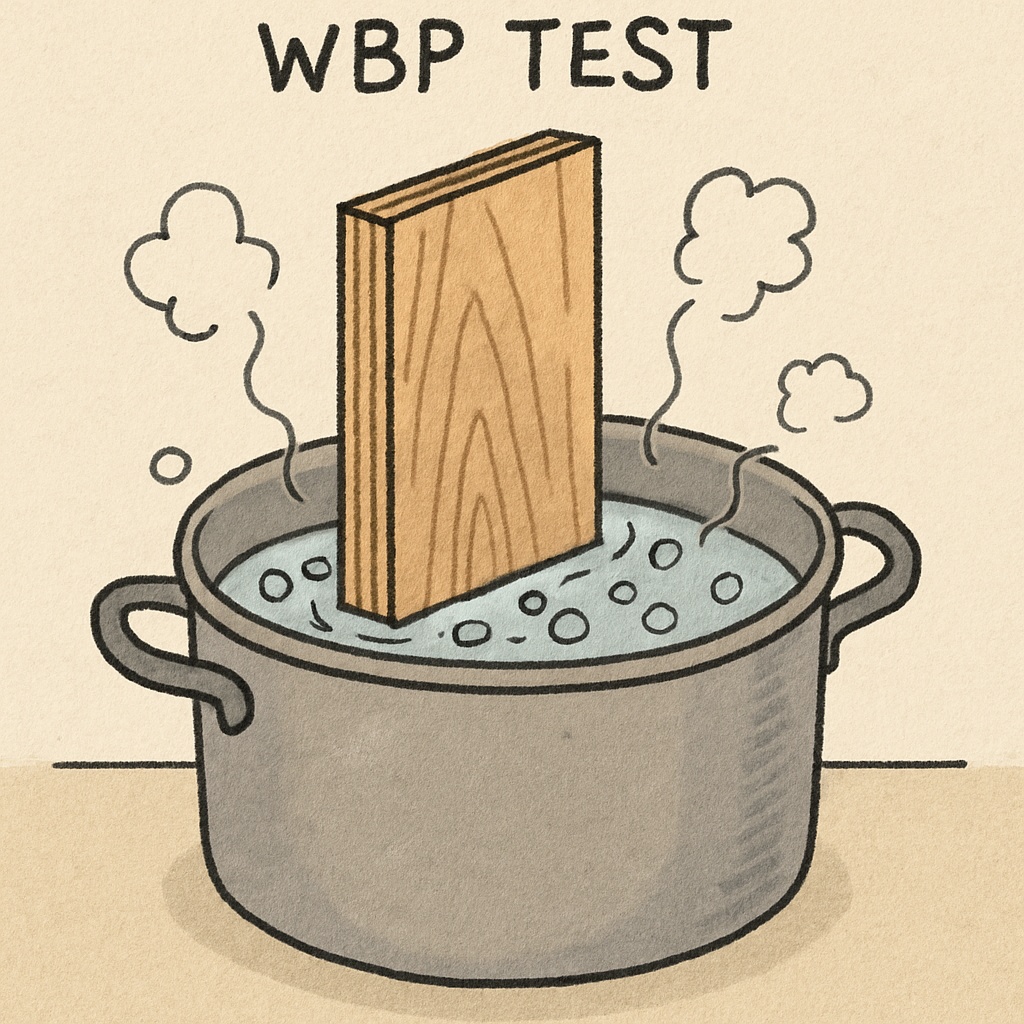
You could have the strongest birch core in the world, but it becomes useless if the layers peel apart the moment they get wet. This separation usually happens because the manufacturer used 'MR' (Moisture Resistant) glue—which is actually intended for indoor use—instead of 'WBP' (Weather and Boil Proof) adhesive. While Marine grade plywood vs film faced shuttering are distinct categories, they share a reliance on this waterproof phenolic bond to survive the elements. Recognizing that weak adhesive is one of the main causes of film faced plywood delamination prevents you from buying a board that turns into a soggy deck of cards after one rainstorm.
Manufacturers verify this durability using a brutally simple method called the boil test. The WBP glue boiling test duration acts as the definitive durability rating; a standard board might last 10 hours in boiling water, while a premium board will survive 72 hours without opening up. As you review these specifications, also check formaldehyde emission levels in construction plywood (look for E1 or E0 ratings), ensuring that the potent chemicals keeping your formwork sturdy are safe. Once you know the specs on paper, you need to verify the quality with your own hands.
The 3-Step Physical Check: How to Detect Quality Issues Like a Pro
Don't rely solely on the specification sheet; the physical board often reveals defects that paperwork hides. Start by inspecting the sides of the sheet where manufacturers apply acrylic paint to stop moisture from soaking into the core. Water resistant edge sealing paint quality is a major indicator of overall manufacturing care; if the paint looks thin, patchy, or is missing spots, moisture will inevitably creep in and cause swelling. Next, try lifting the sheet. Since denser wood handles load-bearing tasks better, checking plywood weight for quality assurance is a quick way to spot low-density fillers or hidden voids without needing tools.
Finally, examine the 'sandwich' layers visible on the side of the board for uniformity. You want to see straight, even lines rather than wavy or overlapping strips. Measuring plywood veneer thickness consistency with a simple visual check ensures the board won't warp under pressure. Use this quick routine before loading your truck:
- The Edge Test: Reject boards with chipped, transparent, or messy sealing paint.
- The Lift Test: Compare two boards; significantly lighter sheets likely contain soft or recycled wood.
- The Line Test: Ensure inner layers are symmetrical and free of overlapping 'teeth' or gaps.
Your Final Buyer’s Checklist: Making the Right Investment for Your Project
You no longer have to guess whether a shiny black board will survive the rain. Knowing how to choose high-quality film faced plywood transforms you from a hopeful shopper into a savvy builder. Instead of risking your project on materials that delaminate overnight, you can now confidently select panels that offer true durability and cost-saving reuse, ensuring your hard work stands the test of time.
Keep this cheat sheet handy for your next trip to the lumber yard:
- Core: Check the sides for clean, straight layers (fresh wood) rather than jagged gaps (recycled).
- Glue: Confirm the specs list WBP (Weather and Boil Proof) for water resistance.
- Film: Look for a smooth phenolic coating that resists deep scratches.
- Edges: Ensure all cut sides are fully painted to seal out moisture.
Share Us

点击右上角
分享给朋友吧
Sign up for our newsletter to stay up-to-date with our promotions, discounts, sales, and special offers
INFORMATION
TOP-SELLING PRODUCTS
CONTACT US

No.11, Chuang ye Road of Yitang Industrial Park, Linyi City, China.

0086-178-5394-3002

info@camelply.com
Copyright © Fortune BM 2022 All Rights Reserved.